
When you work with a great PPC agency or freelancer they are all over your Google Ads account, squeezing as much out of it as possible. But if that’s the only thing you’re focusing on you’re leaving a ton of money on the table!
In this post I’ll discuss 5 powerful “external” tools that can dramatically boost your Google Ads performance.
DISCLOSURE: Some of the products mentioned in this post may contain affiliate links that at no additional cost to you, we may earn a small commission. Importantly, we only promote products that we use ourselves.
1. Website Visitor Identification
If you run a B2B in a high-value niche this tool is your new best friend. It will match contacts and business details of visitors that didn’t convert on your website using their IP address. This gives you the opportunity to add them to email, telephone or LinkedIn outreach campaigns. And even if you don’t choose to reach out the intellegence can be extremely useful to understand if your Google Ads campaigns are reaching the intended target audience.
Either way you are going to get way more value from your ad dollars.
There are a plethora of options with different feature sets. A bare bones option will simply give you the list of contact/businesses that visit your site. More robust solutions offer built in outreach solutions.
Popular brands include RB2B, Leadfeeder, Leadinfo, Warmly, and Salespanel.
2. A/B Landing Page Split Testing
If you improve your landing page conversion rate by 25% that’s a 25% increase in sales for your business at virtually no additional increase to your marketing budget. Those extra conversions not only boost your bottom line but can help enrich Google Ads optimization with more data, thus compounding the performance increase even more.
There are a myriad of inexpensive ways to split test landing pages yet more than half of all Google Ads advertisers aren’t doing it at all.
First up are dedicated landing page tools. These include highly effective landing page templates, a WYSIWYG design interface, and built-in variation testing with stastitical calculator. Unbounce, Landingi, and Leadpages are great solutions for small business that start from around $100/month for a reasonable feature set.
What if you need a design but aren’t a designer? A newer generation of AI landing page tools such as Lovable and Sitekick can build your site using Vibe Coding.
What if you already have a great page you want to split test? You have a few different options here. You can use a 3rd party tool to develop and test page variations. Some great options for this are Varify.io and Convert Experiences. You can, atlernatively, also just create a variation of your page on a slightly different URL and then use a Google Ads Experiment or Ad Variation to split traffic between the two pages.
3. Behavioral Insights (Improve your UX)
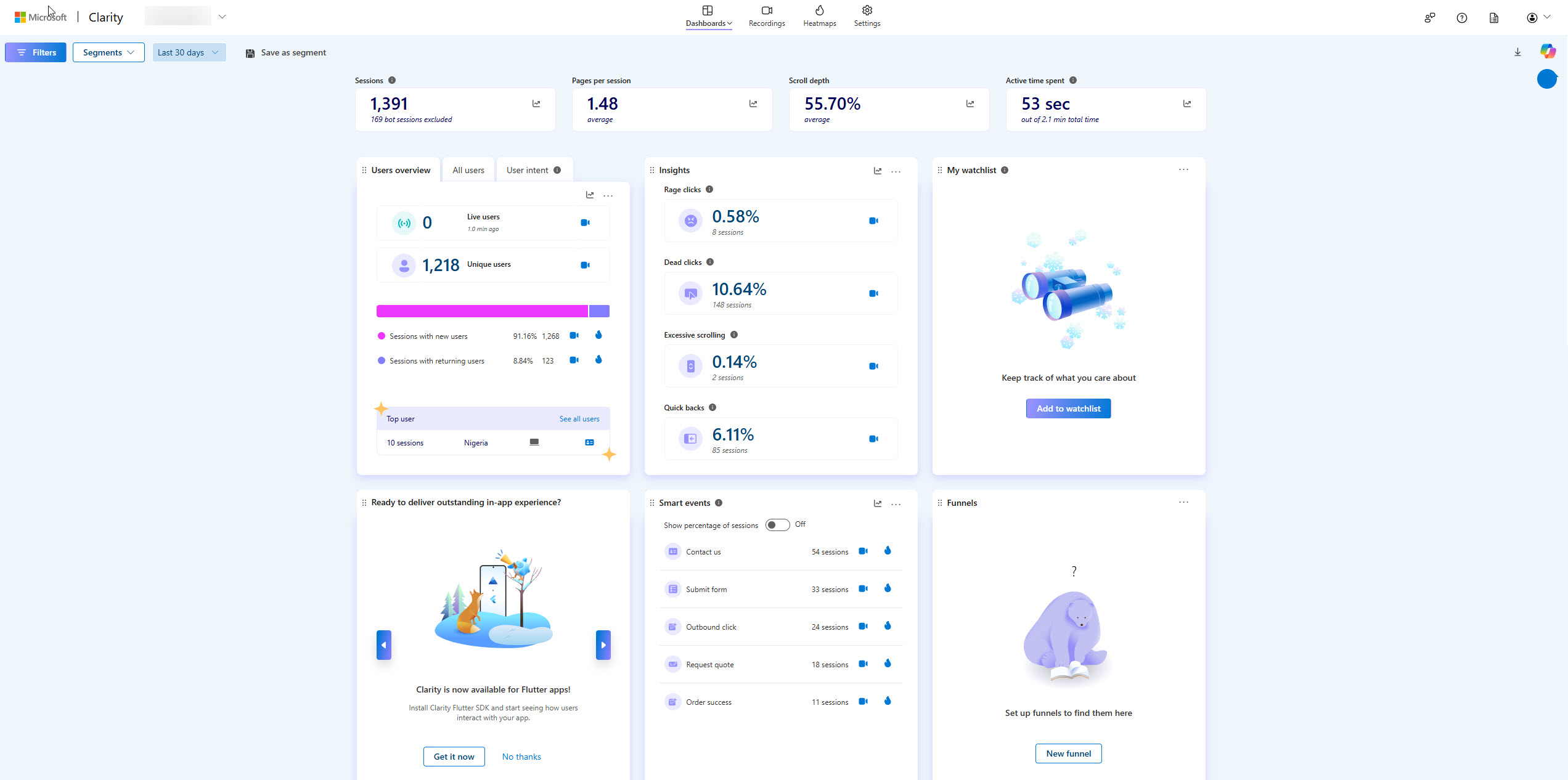
As with split testing, another way to improve your landing page conversion rate is by enhancing your User Experience. Using tools like Hotjar, Crazy Egg, or Clarity (completely free), you can figure out the sticking points on your page, lead capture form, or checkout process that are making people leave rather than convert. Fix those up and watch your conversion rates soar!
4. Offline Conversion Tracking
In the olden days (2020) almost all agencies and advertisers relied on conversion volume as their main performance metric. And as we unanamously counted all form submissions and phone calls (noting some filters like minimum call length) we didn’t address the elephant in the room… lead quality!
But with the rise of automated bidding, black box targeting, and increasingly difficult to deal with lead spam, we needed a better way.
Good agencies now drive an effort to move adverisers to offline conversion tracking. While this can take many forms the goal is the same, help inform Google Ads what good leads actually look like. By improving conversion data quality Google can do a much better job of bidding and background optimization. Advertisers get better quality leads and close more business in a feedback loop. If you’re interested in some ideas how this might work you should check out my “Optimize Google Ads for Lead Quality Automatically” article.
While offline conversions can be uploaded manually, the workload is high and we’ve seen this fail for many advertisers. Many CRMs such as Hubspot and Salesforce support offline conversions natively while most others can be connected to Google Ads via Zapier. If you don’t have a CRM an inexpensive tool like CallRail can capture all your web form and phone call leads. You can then either manually, or using CallRail’s automation, score leads and pass them back to Google Ads.
5. Lead Management Automation (LMA)
The scope of LMA is pretty broad and can include many lead management functions. For the purposes of this post I’m going to focus on addressing the first touch with a new lead. Based on an MIT study, responding to leads within 5 minutes makes them 21 times more likely to qualify than when responding after 30 minutes. Yet many advertisers leave leads in their in box overnight or over the entire weekend because they don’t have time/staff to deal with them.
Lead Management Automation tools can respond to leads immediately to move them from unqualified to MQL, SQL, or even close them as new business. A great example of this is CallRail’s Voice Assist, an AI agent that can answer inbound sales calls, respond appropriatemly to prospect questions, and book appointments without any human intervention. Another excellent tool, WooSender, will automatically communicate with new leads via text, email, and voice, to help them to book and keep an appointment.
Summary
A well managed Google Ads account can drive results for years. But utlimately there are limits to how well you can optimize and how far you scale your campaigns. Working with the right mix of external tools can help you take your campaigns to the next level.





Leave A Comment